
Cybersecurity for Small Businesses
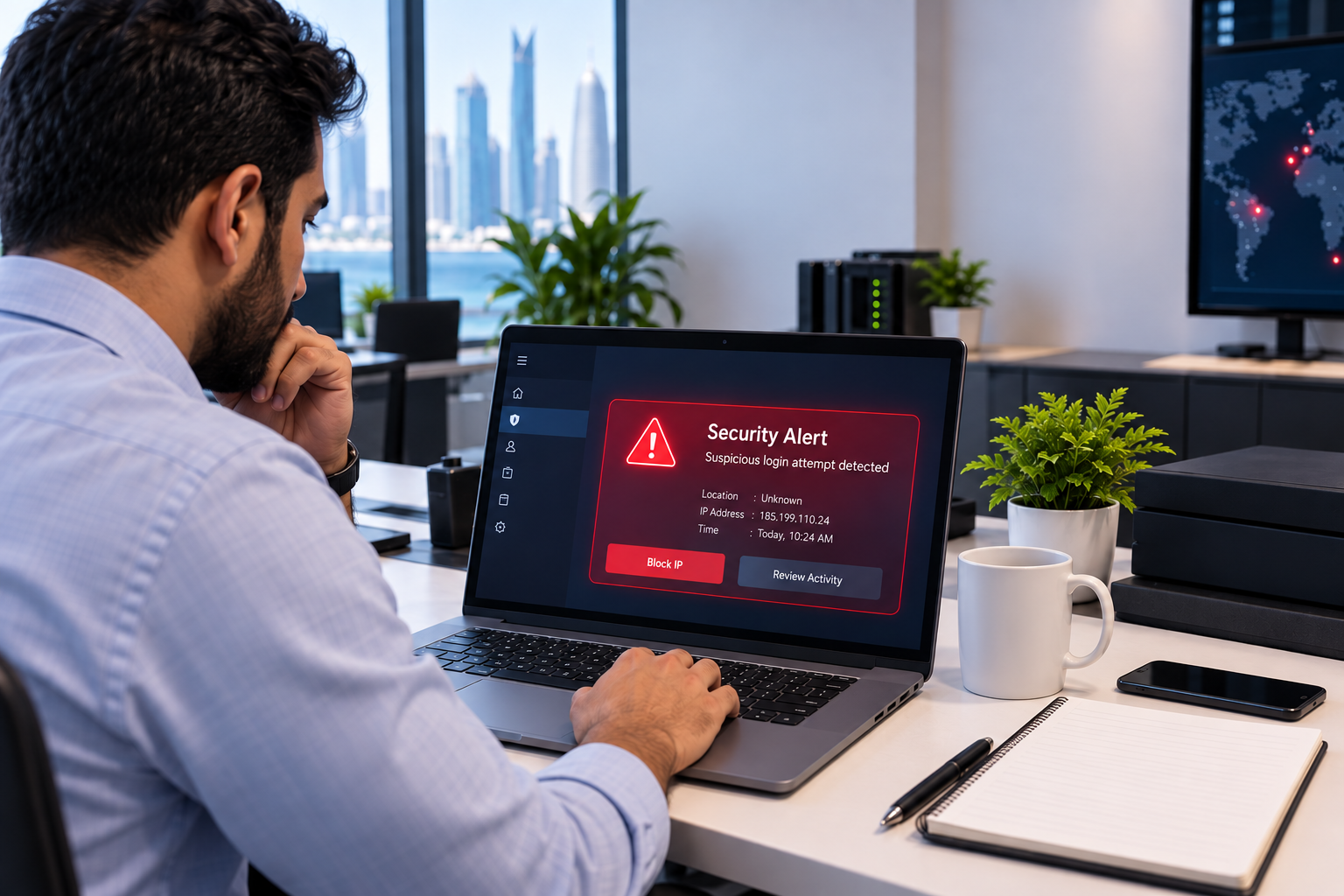
A business does not need hundreds of employees or a huge IT department to become a target for cybercrime. A single suspicious email, stolen password, infected laptop, or compromised account can interrupt daily operations and put important business information at risk.
Cybersecurity for small businesses is therefore no longer something that can be left until the company becomes larger. From customer information and invoices to employee accounts, cloud applications, and business files, even a small company may depend on digital systems every day.
The good news is that protecting a business does not always require a complicated security setup. By understanding the most common threats and putting a few practical safeguards in place, SMEs and startups can significantly improve their security and make it harder for attackers to cause serious damage.

Why Cybersecurity Matters for Small and Medium Businesses
Cyberattacks are often discussed as a problem for large corporations, but smaller businesses have plenty to protect. Customer records, payment information, employee details, business documents, email accounts, and internal systems can all be valuable to attackers.
For a small business, the consequences can also feel much bigger. A larger organization may have dedicated teams and backup systems ready to respond to an incident, while a smaller company may depend on a few people and a handful of critical systems to keep everything running.
This is why small business cybersecurity should focus on practical risk reduction rather than trying to build an unnecessarily complicated security environment.
A useful starting point is the NIST Cybersecurity Framework 2.0 Small Business Quick-Start Guide, which is specifically designed to help small and medium-sized businesses begin managing cybersecurity risks.
Understanding the Cyber Threats Businesses Face Today
Cyber threats continue to change, but many attacks still begin with surprisingly simple weaknesses.
Phishing and Social Engineering
Phishing emails are designed to trick people into clicking a malicious link, opening an attachment, sharing information, or entering login credentials into a fake website.
The message might appear to come from a supplier, manager, bank, delivery company, or familiar online service. That is why employee awareness is just as important as technical security controls.
Malware and Ransomware
Malware can enter a business through malicious downloads, infected attachments, compromised websites, or vulnerable systems.
Ransomware is particularly disruptive because it can prevent access to files and systems until the incident is dealt with. Regular backups, updated software, endpoint protection, and a clear recovery plan can reduce the potential impact.
Password Attacks and Account Takeovers
Weak, reused, or stolen passwords can give attackers an easy way into email accounts, cloud applications, and other business systems.
Once an account has been compromised, attackers may use it to access sensitive information, impersonate employees, or launch further attacks.
Data Breaches
A data breach can expose customer information, employee records, financial details, business documents, or other confidential data.
The damage is not limited to the information itself. A breach can also create operational disruption, financial costs, legal concerns, and loss of customer confidence.
Unsecured Devices and Networks
Laptops, desktops, smartphones, servers, routers, and other connected devices can become entry points when they are poorly configured or left unpatched.
A properly planned business network infrastructure can provide a stronger foundation for secure connectivity, access control, and network management.
How Cyber Threats Can Affect a Small Business
Financial Losses
A cyber incident can lead to direct financial losses through fraud, stolen funds, ransom demands, recovery expenses, or interrupted operations.
For a small company working with limited margins, even a short disruption can have a noticeable effect on cash flow.
Data Loss and Business Disruption
Imagine losing access to customer records, invoices, project files, or accounting information just when your team needs them.
Without reliable backups and recovery procedures, restoring normal operations can take considerably longer. This is why data protection should be considered part of business continuity rather than simply an IT task.
Damage to Customer Trust and Reputation
Customers expect businesses to handle their information responsibly.
A security incident can make customers question whether their information is safe, and rebuilding that confidence can take much longer than fixing the original technical problem.
How to Protect Your Business from Cyber Threats
Good cybersecurity does not have to begin with an expensive technology overhaul. Start with the basics and build from there.
Use Strong Passwords and Multi-Factor Authentication
Use unique passwords for important business accounts and avoid sharing credentials between employees.
Multi-factor authentication (MFA) adds another layer of protection by requiring an additional verification step beyond a password. NIST specifically recommends MFA for small businesses, along with strong passwords and password-management practices.
Keep Software and Devices Updated
Software updates often contain security fixes as well as new features.
Operating systems, browsers, business applications, security software, routers, and other devices should be kept updated. Delaying important security patches can leave known vulnerabilities available to attackers.
Secure Your Business Network
Your network connects employees, devices, applications, and data, so it deserves careful attention.
Firewalls, secure Wi-Fi configurations, network monitoring, access controls, and appropriate segmentation can all help reduce unnecessary exposure.
For businesses that need a broader approach, network and cybersecurity solutions can bring infrastructure, endpoint protection, access management, and security monitoring into a more coordinated environment.
Back Up Important Business Data
Backups can be one of the most valuable safeguards when something goes wrong.
Important files should be backed up regularly, and businesses should make sure those backups are protected and can actually be restored. NIST recommends regular backups and testing backup protections as part of basic cybersecurity practices.
Businesses with more demanding storage and recovery requirements may also consider automated backup and disaster recovery solutions as part of their broader data protection strategy.
Control User Access and Permissions
Employees should have access to the systems and information they need for their work not necessarily everything available across the business.
Review permissions regularly, especially when someone changes roles or leaves the organization. Limiting unnecessary access can reduce the potential impact of a compromised account.
Train Employees to Recognize Cyber Threats
Technology cannot solve every cybersecurity problem. Employees interact with emails, websites, files, passwords, customers, and suppliers every day, so they are an important part of the security process.
Identifying Suspicious Emails and Links
Employees should learn to pause before clicking unexpected links or opening unusual attachments.
Warning signs can include urgent requests, unusual sender addresses, unexpected invoices, requests for passwords, and messages asking for immediate payment.
Safe Password and Account Practices
Employees should never share passwords through email or messaging apps.
Using unique passwords, MFA, password managers, and approved business applications can make everyday account security much easier to manage.
Creating a Security-Aware Workplace
Cybersecurity should not become a culture of blaming employees when something goes wrong.
Instead, create an environment where employees feel comfortable reporting suspicious emails, accidental clicks, lost devices, or unusual account activity quickly. Early reporting can give the business more time to respond.
Choosing the Right Cybersecurity Solutions for a Small Business
There is no single cybersecurity product that protects every part of a business.
Antivirus and Endpoint Protection
Endpoint protection helps monitor laptops, desktops, and other devices for malicious activity.
It should be supported by regular updates and sensible device-management practices.
Firewall and Network Security
A firewall can help control traffic entering and leaving a business network.
For organizations with multiple locations, remote workers, servers, or more complex network requirements, additional network-security controls may be appropriate.
Email and Web Protection
Because phishing and malicious links remain common attack methods, email and web protection can provide another layer of defense.
Filtering suspicious messages before they reach employees can reduce the number of threats they have to identify themselves.
Backup and Recovery Solutions
Security is not only about preventing an attack. Businesses also need to think about what happens if prevention fails.
A combination of secure backups, recovery procedures, and tested restoration processes can help reduce downtime after an incident.
What to Do If Your Business Experiences a Cyberattack
Even a well-protected business can experience a security incident. Knowing what to do beforehand can prevent panic and reduce further damage.
Isolate Affected Devices
If a computer appears to be infected, disconnecting it from the network can help prevent the problem from spreading.
Do not immediately delete everything or start making major changes before understanding what happened.
Secure Accounts and Change Credentials
If an account may have been compromised, secure it as quickly as possible.
Change affected passwords, revoke suspicious sessions, enable MFA where available, and review account activity for anything unusual.
Restore Data and Assess the Damage
Once the immediate threat has been contained, identify what systems and information were affected.
If reliable backups are available, they can help restore normal operations. A documented incident response and recovery process can make this stage much more manageable.
Common Cybersecurity Mistakes Small Businesses Should Avoid
Many security problems come from simple oversights rather than sophisticated hacking techniques.
Common mistakes include:
- Reusing the same password across multiple accounts
- Ignoring software and security updates
- Allowing unnecessary administrator access
- Failing to back up important data
- Assuming antivirus alone is enough
- Ignoring suspicious emails or unusual account activity
- Giving employees access to information they do not need
- Having no plan for responding to a cyber incident
- Forgetting to review security as the business grows
Avoiding these mistakes can significantly improve a company’s overall security posture.
Building a Practical Cybersecurity Strategy
The best cybersecurity strategy for a small business is one that employees can actually follow and management can realistically maintain.
Start by identifying the systems and information that are most important to the business. Then consider what could happen if those systems were unavailable, compromised, or exposed.
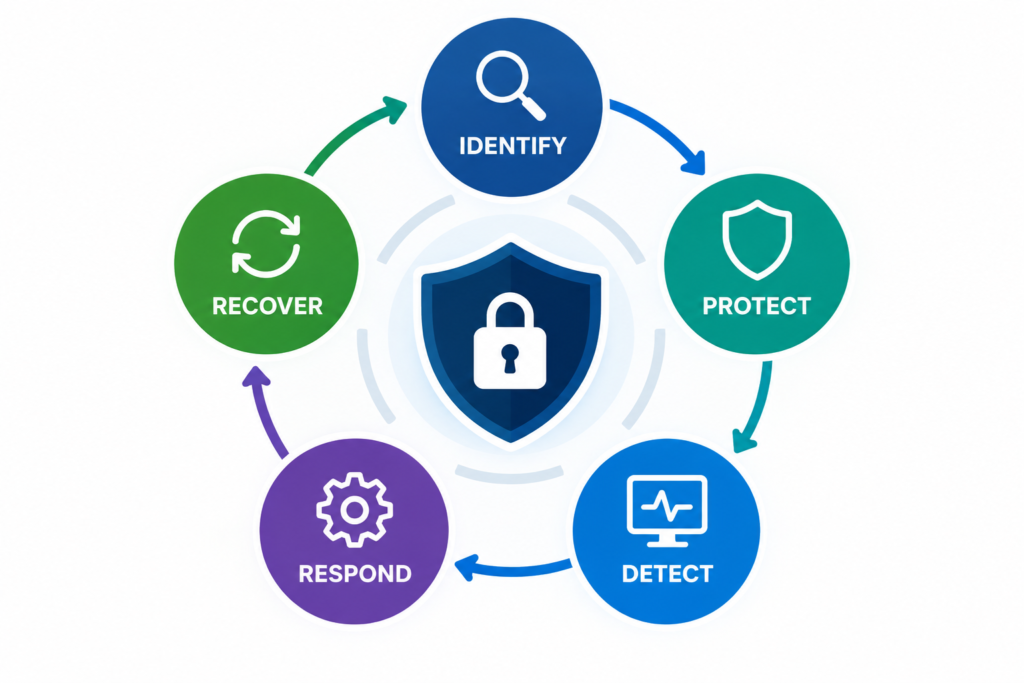
A practical strategy should cover:
- Identify: Know your important systems, devices, accounts, and data.
- Protect: Use passwords, MFA, updates, firewalls, endpoint security, and access controls.
- Detect: Monitor for unusual activity and security warnings.
- Respond: Know who should act and what steps to take during an incident.
- Recover: Maintain reliable backups and a clear recovery process.
This risk-based approach aligns with the NIST Cybersecurity Framework 2.0, which provides small businesses with a structured way to understand, prioritize, and manage cybersecurity risks.
Frequently Asked Questions
How Can I Protect My Business from Cyber Threats?
Start with strong passwords, MFA, regular software updates, secure networks, reliable backups, endpoint protection, and employee security training. Regularly reviewing user permissions and important business systems can also help reduce unnecessary risks.
How Can I Protect Against Cybersecurity Threats?
Cybersecurity works best as a combination of people, processes, and technology. Protect devices and networks, train employees to recognize threats, control access to business data, keep systems updated, and have a recovery plan if an attack occurs.
What Are the Most Common Cybersecurity Threats for Businesses?
Common threats include phishing, ransomware, malware, password attacks, account takeovers, data breaches, malicious links, and attacks that exploit outdated software or poorly secured devices.
What Is the Best Cybersecurity Solution for Small Businesses?
There is no single solution that fits every business. A sensible starting point is a combination of endpoint protection, firewall and network security, MFA, secure backups, email protection, access controls, software updates, and employee training.
Protecting Your Business Before a Cyber Threat Happens
Cybersecurity becomes much easier when it is treated as part of normal business management rather than something to think about after an attack.
Small and medium businesses do not need to implement every security technology available. They need to understand what they are protecting, identify their biggest risks, and put sensible safeguards around the systems their employees and customers depend on.
Start with the basics: secure accounts, protect devices, update software, back up important data, control access, train employees, and know how your business would respond if something went wrong.
As your company grows, your cybersecurity strategy should grow with it. Regular reviews can help ensure that new employees, devices, cloud applications, and business systems do not create security gaps.
The most important step is simply to start before there is a problem. A practical cybersecurity strategy for SMEs can help reduce avoidable risks, protect important business information, and give your team greater confidence in the technology they use every day.