
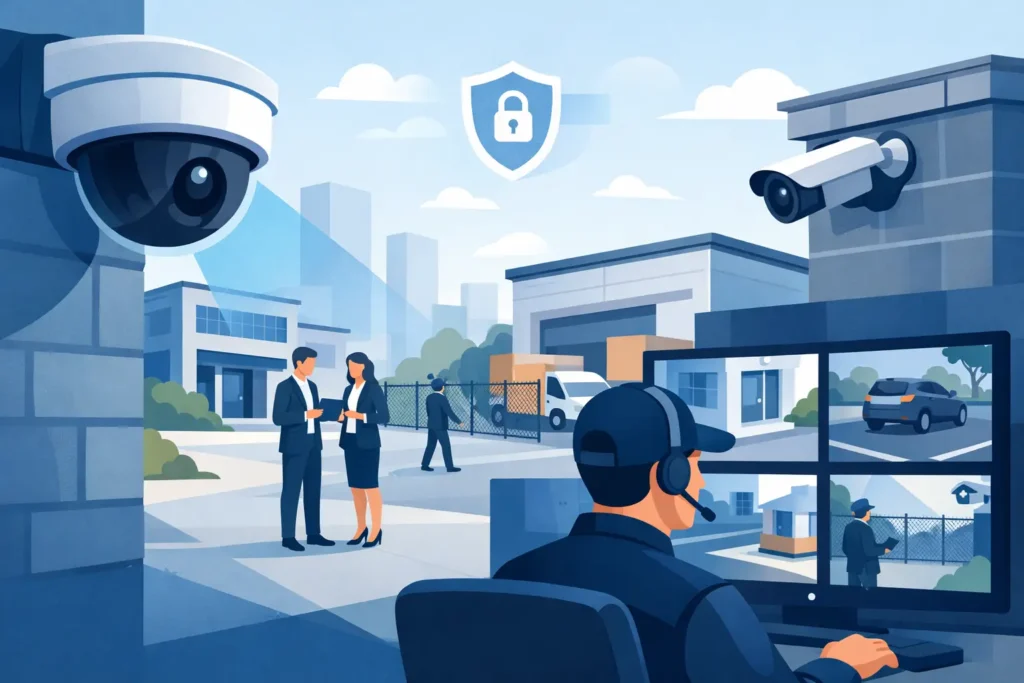
A camera placed in the wrong spot can create a false sense of security. It may record plenty of movement while missing the loading bay, the side entrance, or the handoff point where stock disappears. That is why business CCTV installation is not just about mounting cameras. It is about designing coverage that matches how your site actually operates.
For business owners, operations teams, and IT decision-makers, CCTV is part of a larger risk management strategy. It supports loss prevention, incident review, staff safety, and operational oversight. When it is planned correctly, it also fits cleanly into your network, storage, and support model instead of becoming another isolated system that is difficult to manage.
What business CCTV installation should accomplish
A business surveillance system needs to do more than record video. It should help you see critical areas clearly, retrieve footage quickly, and maintain reliable uptime over the long term. In a warehouse, that may mean strong coverage of receiving, dispatch, and inventory movement. In an office, it may mean monitoring entrances, reception, parking, and restricted areas. In retail, it may center on customer traffic, point-of-sale visibility, and after-hours security.
The right design depends on your environment, your operating hours, and the level of risk across different parts of the property. A small office with one public entrance will have very different requirements than a multi-floor facility with server rooms, loading zones, and external access points. Treating every site the same usually leads to weak coverage in the places that matter most.
Why planning matters in business CCTV installation
The biggest mistakes in CCTV projects usually happen before the first camera is installed. Businesses often focus on camera quantity instead of camera purpose. More devices do not automatically create better security if image quality, viewing angle, lighting conditions, and recording retention have not been properly considered.
A good site assessment looks at traffic flow, blind spots, lighting changes, cabling routes, storage requirements, and network impact. It also considers how footage will be used. If your team may need to identify faces, read license plates, or investigate incidents at specific points of transaction, those objectives affect lens selection, placement height, and recording settings.
This is where working with an experienced technology partner adds value. CCTV does not sit apart from the rest of your infrastructure. It interacts with switching, power, structured cabling, storage, internet access, and cybersecurity controls. If those elements are overlooked, even good cameras can underperform.
Choosing the right camera types for your site
Not every business needs the same camera mix. Dome cameras are often used indoors where a compact profile and broad coverage make sense. Bullet cameras are common for perimeter monitoring because they are visible and well suited to fixed outdoor views. PTZ cameras can cover larger open spaces where operators may need to adjust direction and zoom, but they are not always the best replacement for fixed cameras in high-priority locations.
Image quality also needs practical thinking. Higher resolution can improve detail, but it also increases storage demand and network load. For some areas, a standard resolution camera is enough to confirm movement and timing. For entrances, cash handling points, and vehicle access zones, greater detail may be worth the added cost. The right answer is usually a balanced mix rather than using the highest specification everywhere.
Low-light performance is another area where business needs vary. A parking lot, alley, or service entrance may require infrared capability or stronger night performance than interior corridors. Daytime coverage alone is not enough if your risk increases after business hours.
Storage, retention, and access are part of the job
One of the most common gaps in business CCTV installation is underestimating storage. Recording settings, camera count, image resolution, and retention policies all affect how much capacity you need. A business that assumes 30 days of footage without calculating bitrate and usage can run into retention problems very quickly.
There is also the question of where footage lives and who can access it. Some businesses prefer on-premises recording for control and speed. Others want hybrid options that support remote viewing and resilience. The right model depends on your security policies, compliance needs, and operational preferences.
Access controls matter just as much as storage size. Footage should be available to authorized users without being widely exposed across the organization. Role-based permissions, secure remote access, and audit visibility become increasingly important for growing businesses with multiple stakeholders.
Business CCTV installation and network performance
Modern surveillance systems are networked systems. That creates useful flexibility, but it also means CCTV should be deployed with the same discipline as other core IT services. Cameras consume bandwidth, recording devices require stable connectivity, and remote access introduces security considerations that should not be ignored.
For many organizations, the best outcome comes from treating CCTV as part of the wider infrastructure plan. That includes switch capacity, PoE requirements, VLAN design where appropriate, and protection for video management systems and connected endpoints. If the surveillance network is poorly planned, users may face dropped feeds, slow access to footage, or performance issues elsewhere on the network.
Cybersecurity is another practical concern. Internet-connected devices can become a weak point if they are installed with default settings, outdated firmware, or weak access policies. A professional deployment should include secure configuration and a clear maintenance plan, not just hardware setup.
Installation quality affects long-term reliability
Even the best system design can be undermined by poor execution. Camera placement needs to account for glare, vibration, weather exposure, tampering risk, and realistic viewing angles. Cabling should be clean, protected, and professionally routed. Mounting hardware needs to match the environment, particularly outdoors or in industrial spaces.
Reliability is not only about the first week after installation. A business system should be built for daily use, ongoing monitoring, and straightforward serviceability. If a recorder fails, if a camera goes offline, or if a user needs archived footage during an active incident, the system should support fast response rather than create delays.
That is one reason many businesses prefer a provider that can supply, install, maintain, and support the broader environment. When surveillance, networking, storage, and support are handled in alignment, troubleshooting tends to be faster and accountability is clearer.
When a standard package is not enough
Some businesses can operate effectively with a straightforward CCTV setup. Others need a more integrated approach. Multi-site operations may require centralized visibility. Warehouses may need coverage tied to access points and inventory movement. Offices with sensitive departments may need stronger monitoring around restricted areas. Facilities with public access may need to balance security visibility with a professional customer environment.
There is no single blueprint that fits every business. Budget matters, but so do risk level, site complexity, and future growth. A lower-cost system may meet short-term needs, but if it cannot scale, lacks support, or creates storage and coverage limitations, it can cost more over time.
This is why solution-led planning matters. TASMEEM TECH TRADING approaches surveillance as part of a dependable business technology environment, helping organizations align camera systems with infrastructure, security, and long-term service needs.
What to look for in a business CCTV installation partner
The right installer should ask detailed questions before recommending equipment. They should want to understand your site, your priorities, and how your team will use the system after deployment. If the conversation starts and ends with camera count and price, the design may be too shallow for business use.
Look for a partner that can assess infrastructure, recommend suitable storage and network requirements, and provide clear support after installation. Maintenance matters. Firmware updates, system health checks, hardware replacement, and user support all affect whether your CCTV investment stays reliable.
It also helps to work with a provider that understands the wider business environment. Surveillance is often linked to broader needs such as structured cabling, switching, access control, cybersecurity, and ongoing IT support. Coordinating these services through one accountable partner can reduce downtime and simplify management.
A good CCTV system should give you confidence, not just footage. It should help your team respond faster, investigate issues more clearly, and protect the people, property, and operations that keep your business moving. If your current setup leaves blind spots, inconsistent image quality, or uncertainty about what was actually captured, it may be time to treat CCTV as a business-critical system rather than a basic security add-on.