
Architectural Design to Construction
A construction project can look straightforward on paper: create the design, approve the plans, hire the right people, and start building. In reality, the process can involve dozens of decisions, multiple teams, changing requirements, material considerations, budgets, and deadlines. When those pieces are not properly coordinated, even a well-designed project can become unnecessarily complicated.
This is where design build services offer a different approach. Instead of treating architectural design and construction as two completely separate processes, design-build brings them together within a coordinated project structure. The idea is simple: connect the people designing the project with the people responsible for making that design work on site.
For property owners, developers, businesses, architects, and project managers, this can mean fewer communication gaps and a clearer path from the first concept to the finished building. But design-build is not simply about putting two services under one roof. It is about creating better coordination throughout the project lifecycle and making decisions with both design and construction in mind.
What Are Design-Build Services?
Design-build is a construction project delivery method that combines design and construction responsibilities within one coordinated process.
In a traditional arrangement, a property owner may first work with an architect or design consultant to develop the project. Once the design is completed, the owner may then approach contractors to bid on or execute the construction work.
This can work perfectly well, but it creates a point where responsibility moves from one team to another.
With design-build, the design and construction functions are integrated from an earlier stage. The professionals involved in planning the project can work more closely with those responsible for construction, allowing practical considerations to influence decisions before work begins on site.
The result is a more connected workflow rather than a strict separation between designing and building.
Why Can Separate Design and Construction Become Complicated?
The design of a building is only one part of delivering a successful project.
A design decision can affect materials. Material selection can affect cost and availability. Construction methods can affect the design. A change in one area can then influence the schedule, budget, or work of another team.
When separate companies or consultants are responsible for each stage, communication becomes especially important.
Imagine an architect specifies a particular material that later turns out to be difficult to source within the required timeframe. The contractor may need to suggest an alternative, the designer may need to approve it, and the owner may need to review the cost difference.
None of these steps is unusual, but every additional handover creates another opportunity for delays or misunderstandings.
An integrated approach aims to reduce these gaps by encouraging design and construction teams to consider the same project requirements together.
How Design-Build Can Simplify Construction Projects
1. A More Connected Project Structure
One of the main advantages of design build construction is having design and construction connected within one delivery structure.
Instead of treating the design team and construction team as completely independent parties, the project can be managed around shared objectives.
This can make it easier to discuss questions such as:
- Can the proposed design be built efficiently?
- Are the selected materials practical?
- Does the design fit within the budget?
- How could a design change affect the construction schedule?
- Are there potential site challenges that should be addressed early?
Having these conversations before construction progresses too far can help reduce avoidable complications.
2. Better Communication
Construction projects generate a large amount of information.
Drawings, specifications, material selections, schedules, budgets, technical requirements, and site changes all need to remain aligned.
When communication is fragmented, a small misunderstanding can sometimes have a much larger impact later.
With an integrated approach, the people responsible for design and construction can communicate more directly. This does not eliminate the need for documentation, approvals, or project management, but it can create a more straightforward communication process.
For a property owner, this can also make it easier to understand how a particular design decision affects the practical side of construction.
3. Earlier Identification of Construction Issues
A design may look completely workable during the planning stage but present difficulties once construction begins.
Perhaps a particular installation method is complicated. Perhaps a material requires a longer procurement period. Or perhaps the site presents a condition that was not obvious during the initial design.
When construction professionals are involved early, some of these concerns can be identified before they become site problems.
This is one of the practical strengths of integrated design and construction: decisions can be evaluated from both the design and construction perspectives.
4. More Efficient Decision-Making
Projects often slow down when a decision has to move through several separate parties.
For example, a proposed change may need to go from the owner to the architect, from the architect to the contractor, and then back again for clarification or approval.
An integrated project structure can simplify some of these conversations.
This does not mean every decision is automatically faster. Major changes will still require proper review, documentation, cost analysis, and approval. The difference is that the relevant design and construction perspectives can be brought into the discussion together.
5. Better Coordination Between Budget and Design
A beautiful design still has to work within the project’s financial limits.
Budget considerations can influence materials, finishes, construction methods, equipment, and even aspects of the building’s layout.
When design and construction are closely connected, practical cost considerations can be discussed during the planning process rather than becoming a major issue after the design is complete.
This can help owners make more informed decisions about where to invest and where alternatives may be appropriate.
Design-Build vs. Traditional Construction
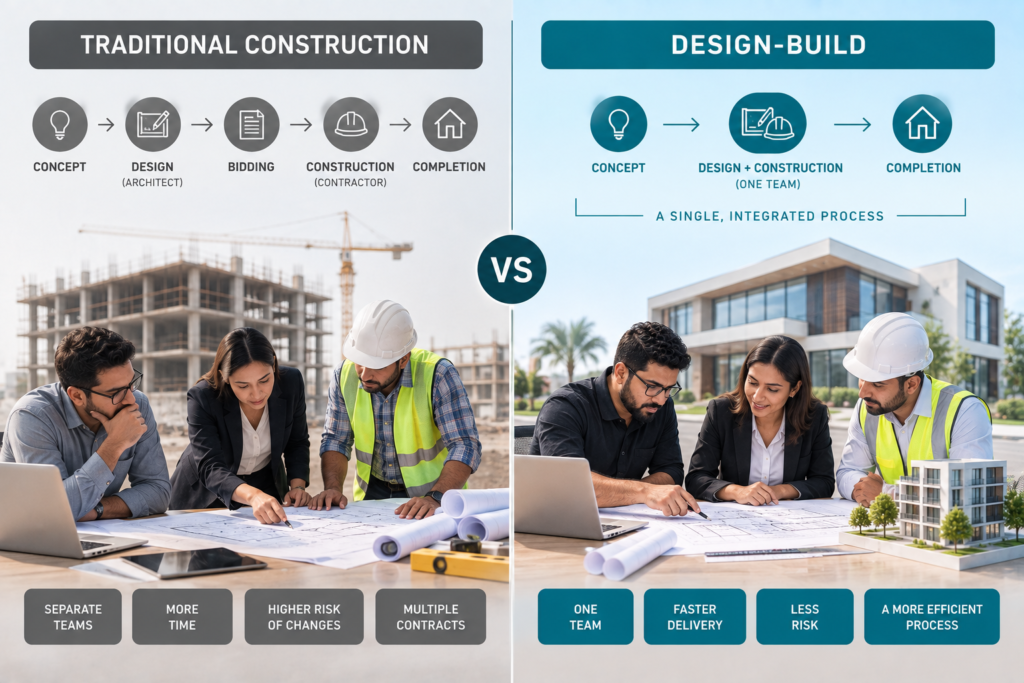
The easiest way to understand the difference is to look at the project structure.
In a traditional model, the process may look like:
Design → Contractor selection → Construction → Coordination between teams
With a design-build approach, it can look more like:
Planning → Integrated design and construction coordination → Construction → Completion
The important difference is not that one model always works and the other does not.
Traditional procurement can be useful when an owner wants independent design and construction teams or prefers to separate those responsibilities.
Design-build may be more attractive when the owner wants a single coordinated approach connecting design decisions with construction execution.
The right choice depends on the project’s size, complexity, budget, schedule, contractual requirements, and the level of control the owner wants throughout the process.
What Types of Projects Can Use Design-Build?
Design and build services Qatar can be considered for different types of construction and development projects.
Examples may include:
- Commercial buildings
- Office spaces
- Retail developments
- Residential projects
- Industrial facilities
- Renovation and fit-out projects
- Business premises
- Specialized construction projects
The suitability of the approach depends on the individual project.
A relatively straightforward commercial development may benefit from having design and construction coordinated from the beginning. A highly specialized project may require a more detailed procurement and consultant structure.
For projects in Qatar, planning also needs to take into account the specific site, project requirements, approvals, materials, schedules, and applicable regulations.
What Should You Look for in a Design-Build Company?
Choosing a design build company Qatar property owners can rely on requires more than simply checking whether the company offers both design and construction.
Experience matters.
Look at the types of projects the team has handled and whether that experience is relevant to your own requirements. A team experienced in commercial projects may have a different skill set from one focused primarily on residential work.
Communication is equally important. Ask how design changes are handled, how project information is shared, how progress is reported, and who is responsible for different decisions.
You should also consider:
- Relevant project experience
- Design and technical capabilities
- Construction expertise
- Project planning and scheduling
- Quality control processes
- Cost management
- Communication and reporting
- Ability to coordinate different contractors and specialists
- Experience with projects of similar size and complexity
The goal is to find a design-build contractor that can understand both the vision behind the project and the practical requirements needed to deliver it.
How Does Project Management Fit Into Design – Build?
Good construction project management remains important regardless of the delivery model.
Combining design and construction does not mean that planning, scheduling, budgeting, documentation, quality control, and site coordination can be overlooked.
In fact, the integrated nature of design-build makes effective project management even more important.
The project team needs to keep design decisions, procurement, construction activities, budgets, and timelines moving in the same direction.
Regular communication and clear responsibilities can help identify issues before they affect later stages of the project.
For owners and developers, this means asking not only “Who will design and build the project?” but also “How will the project be managed from beginning to end?”
Is Design – Build Always the Better Choice?
Not necessarily.
Every construction project has different requirements.
Some owners may prefer to have complete independence between the architect and contractor. Others may want to obtain separate competitive proposals for design and construction.
Design-build can be particularly useful when coordination and a streamlined delivery structure are priorities, but it should not be selected simply because it sounds faster or easier.
Before choosing a delivery method, consider:
- How complex is the project?
- How quickly does construction need to begin?
- How involved do you want to be in coordinating different teams?
- How flexible is the design?
- What are the budget constraints?
- How important is early contractor involvement?
- What contractual structure best suits the project?
The best approach is the one that matches the project’s actual needs.
Frequently Asked Questions
What are design – build services?
Design-build services combine the design and construction stages within one coordinated project delivery approach. This allows design and construction professionals to work together throughout the project.
What is the difference between design – build and traditional construction?
Traditional construction often separates the design and construction responsibilities, while design-build brings them together within a more integrated project structure.
Can design-build reduce construction delays?
It can help reduce delays caused by communication and coordination gaps, particularly when design and construction teams work together from an early stage. However, factors such as approvals, procurement, site conditions, and project complexity still affect the overall schedule.
Is design – build suitable for commercial projects?
Yes. Design-build can be suitable for offices, retail spaces, commercial developments, industrial facilities, and other projects where close coordination between design and construction is valuable.
How do I choose a design – build contractor in Qatar?
Consider the contractor’s relevant experience, design and construction capabilities, project management approach, communication process, quality control, and experience with projects similar to yours.
From Architectural Concept to Completed Project
A construction project is more than a set of architectural drawings. The design needs to work with the budget, materials, construction methods, site conditions, schedule, and practical requirements of the project.
That is why the relationship between design and construction matters.
Design build services create an opportunity to connect these two sides earlier, allowing project teams to consider design decisions and construction requirements together. For owners and developers, this can mean clearer communication, fewer coordination gaps, and a more connected path from planning to completion.
For anyone planning a construction or development project in Qatar, the most important step is to understand the project’s requirements before choosing how it should be delivered. A coordinated approach can make the process easier to manage, while the right project team can help turn the original architectural concept into a practical finished space.