
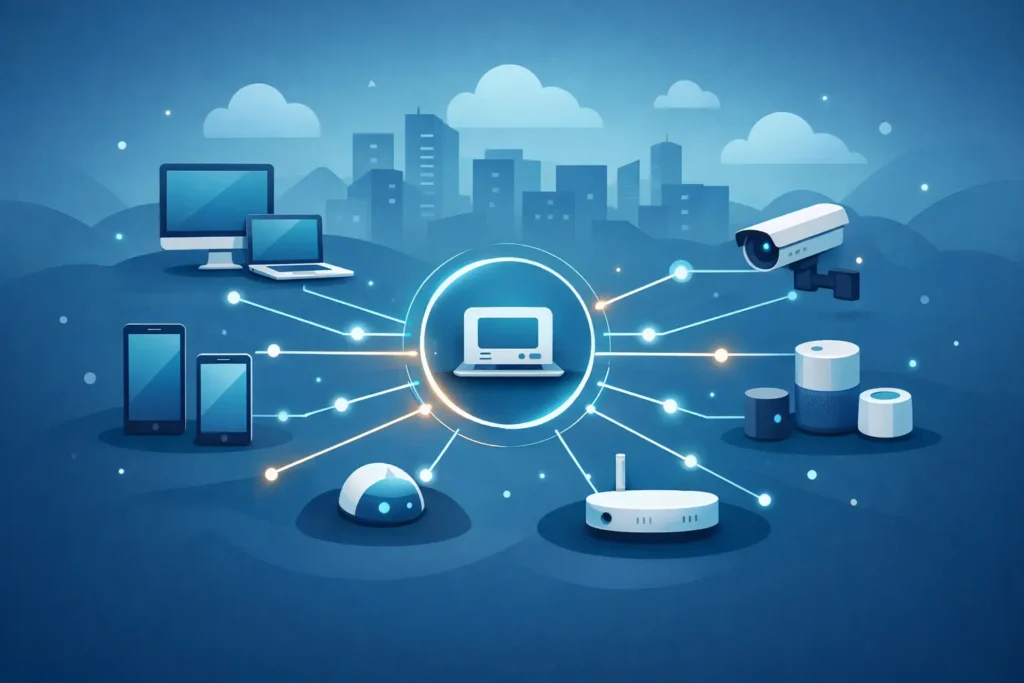
Your firewall may be configured correctly, your switches may be stable, and your internet circuit may be performing as expected – but one unmanaged laptop can still create serious risk. That is why understanding what is a network endpoint matters for any business that relies on connected systems, users, and devices to operate day to day.
What is a network endpoint?
A network endpoint is any device that connects to a network and sends or receives data. In practical business terms, it is the edge of the network where users, machines, or systems interact with company resources.
The most common examples are laptops, desktops, smartphones, tablets, printers, IP phones, servers, and security cameras. In many environments, endpoints also include wireless access devices, point-of-sale systems, smart TVs, storage appliances, and Internet of Things devices used in operations or facilities.
If a device has a network identity and communicates over your wired or wireless infrastructure, it is generally considered an endpoint. Some organizations use the term more narrowly to describe user devices such as PCs and phones. Others use it more broadly to include almost every connected asset. The exact definition can vary by vendor, security platform, or IT policy, which is why context matters.
Why network endpoints matter in business environments
Endpoints are where productivity happens, but they are also where many IT issues begin. Employees work from laptops. Teams communicate through IP phones and mobile devices. Office printers, surveillance systems, and meeting room equipment all connect through the same broader infrastructure.
That means endpoints affect far more than user convenience. They influence network performance, security exposure, software compliance, and support workload. A poorly configured endpoint can cause repeated login failures, spread malware, consume excessive bandwidth, or become the weak point that allows unauthorized access.
For small and mid-sized businesses, this is especially important because endpoint growth often happens quietly. A company may begin with twenty PCs and a few printers, then add wireless devices, cloud-managed phones, cameras, remote user laptops, backup appliances, and guest access systems. Over time, the number of endpoints increases faster than the controls around them.
Common types of network endpoints
In a typical office or multi-site business, endpoints usually fall into several categories.
User endpoints include desktops, laptops, tablets, and smartphones. These are the devices employees use directly, and they often represent the highest volume of support tickets because they are exposed to changing users, software installations, and remote access needs.
Operational endpoints include printers, scanners, point-of-sale terminals, biometric devices, and specialized business equipment. These may not look like traditional computers, but they still rely on the network and often need access control, firmware updates, and monitoring.
Communication endpoints include IP phones, video conferencing units, and collaboration room systems. These devices are essential for day-to-day operations and can be sensitive to poor network design, especially where voice traffic and data traffic compete.
Infrastructure-related endpoints can include servers, network-attached storage, CCTV cameras, and access control systems. Some IT teams separate these from user endpoints, while others manage them together under a broader endpoint strategy.
How endpoints communicate on a network
Every endpoint joins the network through some form of connection, usually Ethernet or Wi-Fi. Once connected, it receives an IP address, identifies itself in some way, and begins communicating with local or cloud-based services.
For example, a laptop may connect to a wireless access point, authenticate through company credentials, receive a network address from DHCP, then reach a file server, an email platform, and a cloud application. A printer may receive jobs from multiple users. A camera may send constant video traffic to a recorder or storage system.
From an IT perspective, the endpoint is not just the device itself. It is also the behavior of that device on the network: what it connects to, how much data it uses, what ports and services it depends on, and whether its activity matches business policy.
That is why endpoint visibility is so important. If you do not know which devices are connected, where they are communicating, and whether they are authorized, it becomes much harder to manage risk or troubleshoot performance issues.
What is a network endpoint in cybersecurity?
When people ask what is a network endpoint, they are often really asking a security question. In cybersecurity, an endpoint is any connected device that could be targeted, exploited, or used as a path into the wider environment.
This includes obvious risks such as infected laptops, but also less obvious ones such as outdated printers, unpatched phones, unsupported CCTV systems, or unmanaged personal devices on company Wi-Fi. Attackers do not always start with your core servers. They often look for the easiest connected device to compromise.
An endpoint becomes a security concern when it lacks one or more of the basics: current updates, malware protection, access restrictions, encryption, strong authentication, or proper monitoring. Even a legitimate device can become a problem if it is misconfigured or no longer maintained.
This is where businesses need a balanced approach. Strong endpoint security improves protection, but if controls are too restrictive or poorly implemented, they can interrupt normal operations. The right setup depends on the type of endpoint, the sensitivity of the data involved, and how the device is used by the business.
Endpoint management is not just for large enterprises
A common misconception is that endpoint management only becomes necessary at large scale. In reality, businesses with modest device counts often feel the impact of poor endpoint control more quickly because they have less margin for downtime.
If one key employee laptop fails, a branch printer goes offline, or a VoIP phone system starts having endpoint registration issues, productivity can drop immediately. Without clear documentation and management policies, support becomes reactive instead of planned.
Good endpoint management usually includes asset tracking, device naming standards, patching, antivirus or endpoint protection, backup planning where relevant, access control, and lifecycle replacement. It also includes separating business-critical endpoints from general traffic through proper network design.
For example, cameras should not sit on the same unrestricted segment as user laptops if there is no business reason for that. Guest devices should not have the same access as corporate endpoints. IP phones may need dedicated quality-of-service considerations. Each of these decisions affects reliability and risk.
Signs your business may have an endpoint problem
Many endpoint issues are visible before they become serious incidents. Repeated malware alerts, unauthorized devices on the Wi-Fi network, slow logins, devices running outdated operating systems, and frequent printer or phone disconnections are all warning signs.
Another sign is when no one can quickly answer simple questions such as how many active devices are on the network, which ones are company-owned, which ones are under warranty, or which ones are missing security updates. That usually points to limited visibility rather than a single technical fault.
In growing organizations, endpoint sprawl is common. New devices are added to solve short-term operational needs, but policies and documentation are not updated at the same pace. Over time, this creates support gaps, security blind spots, and inconsistent user experience.
How to manage network endpoints effectively
The right approach starts with inventory. You need a reliable view of every device connected to your environment, including who owns it, what it does, and whether it is authorized.
From there, standardization makes a major difference. When laptops, phones, printers, and other endpoints are deployed with consistent settings, approved software, and defined support procedures, troubleshooting becomes faster and security becomes easier to enforce.
Segmentation is also important. Not every endpoint should be treated the same way. User devices, voice systems, surveillance equipment, and servers often require different policies. A flat network may work in a very small office, but it becomes risky as more devices and services are added.
Monitoring and maintenance complete the picture. Endpoints need patching, health checks, firmware updates, and periodic review. Devices that are no longer supported or no longer needed should not remain quietly connected to the network.
For many businesses, this is where working with an experienced IT infrastructure partner adds value. The goal is not just to install devices, but to ensure those endpoints fit into a secure, scalable, and supportable environment.
The business value of understanding endpoints
Knowing what is a network endpoint helps decision-makers ask better questions about procurement, security, uptime, and long-term IT planning. It shifts the conversation from buying isolated devices to managing an interconnected business environment.
That matters whether you are opening a new office, upgrading telephony, expanding CCTV coverage, improving cybersecurity, or standardizing user devices across teams. Each new endpoint affects the wider network, and every endpoint should be considered part of your operational infrastructure, not just a standalone purchase.
TASMEEM TECH TRADING supports businesses that need this kind of joined-up thinking – where networking, endpoint security, device deployment, and ongoing support are planned together rather than handled as separate issues.
The more connected your business becomes, the more every endpoint counts. A clear endpoint strategy helps protect uptime, control risk, and keep daily operations moving without unnecessary disruption.